Back to home

Materials

Solid wood, veneer, and what's really inside.

Here's exactly what goes into a piece from this atelier, and why the honest answer isn't always “solid”.

None of this is a sales position. It's the build spec, written down before you sign anything, so that what arrives in your home is what you thought you were buying.

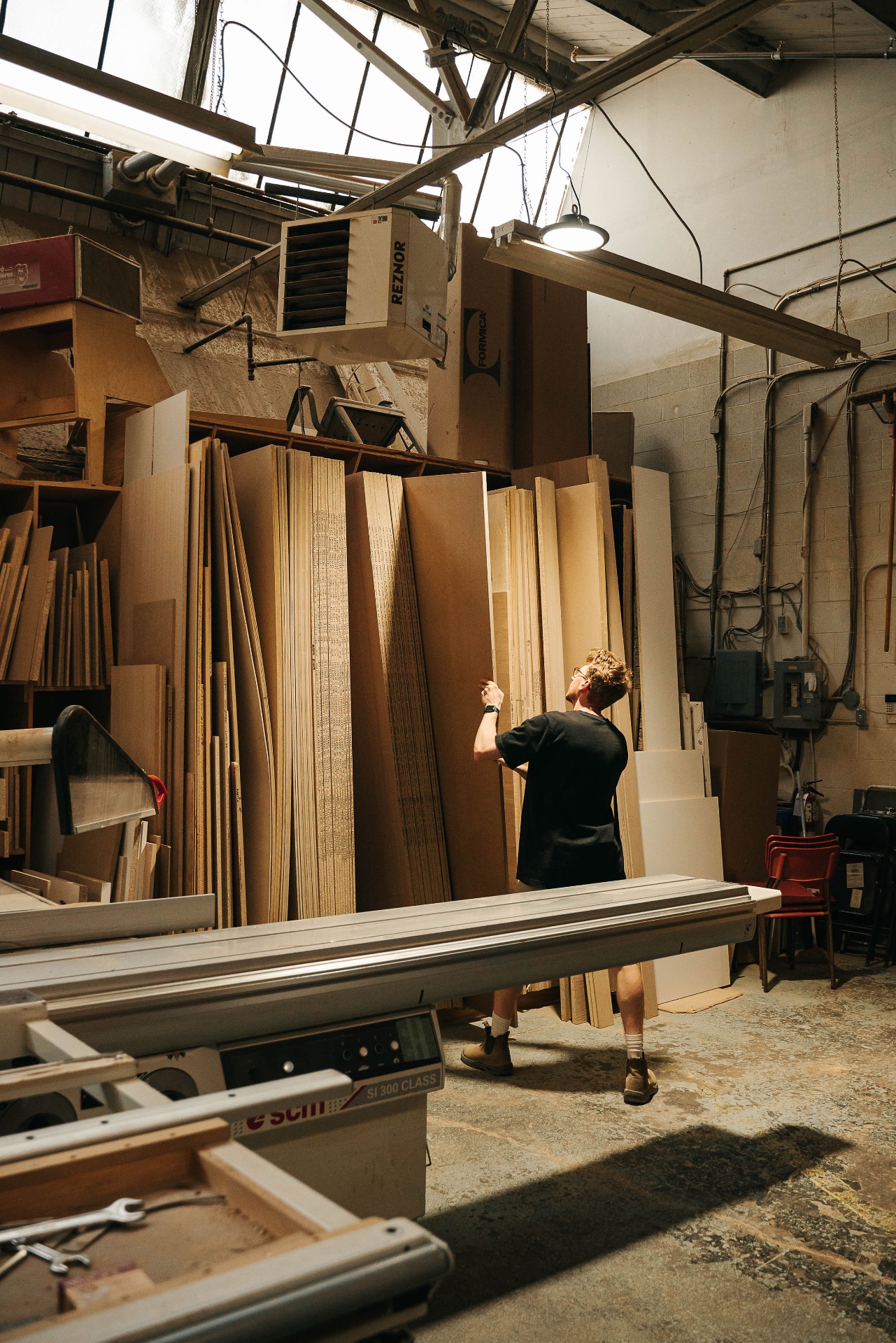
Boards of European oak and ash stacked in the Lisbon atelier
European hardwood, acclimatised in the shop before anything is cut.

01 · Solid timber

Where solid timber is the right choice

Table tops, doors and frames, legs, drawer fronts — anywhere the piece is worked, handled, or will be refinished in twenty years. Solid timber can be sanded back, re-oiled and repaired for as long as the house stands.

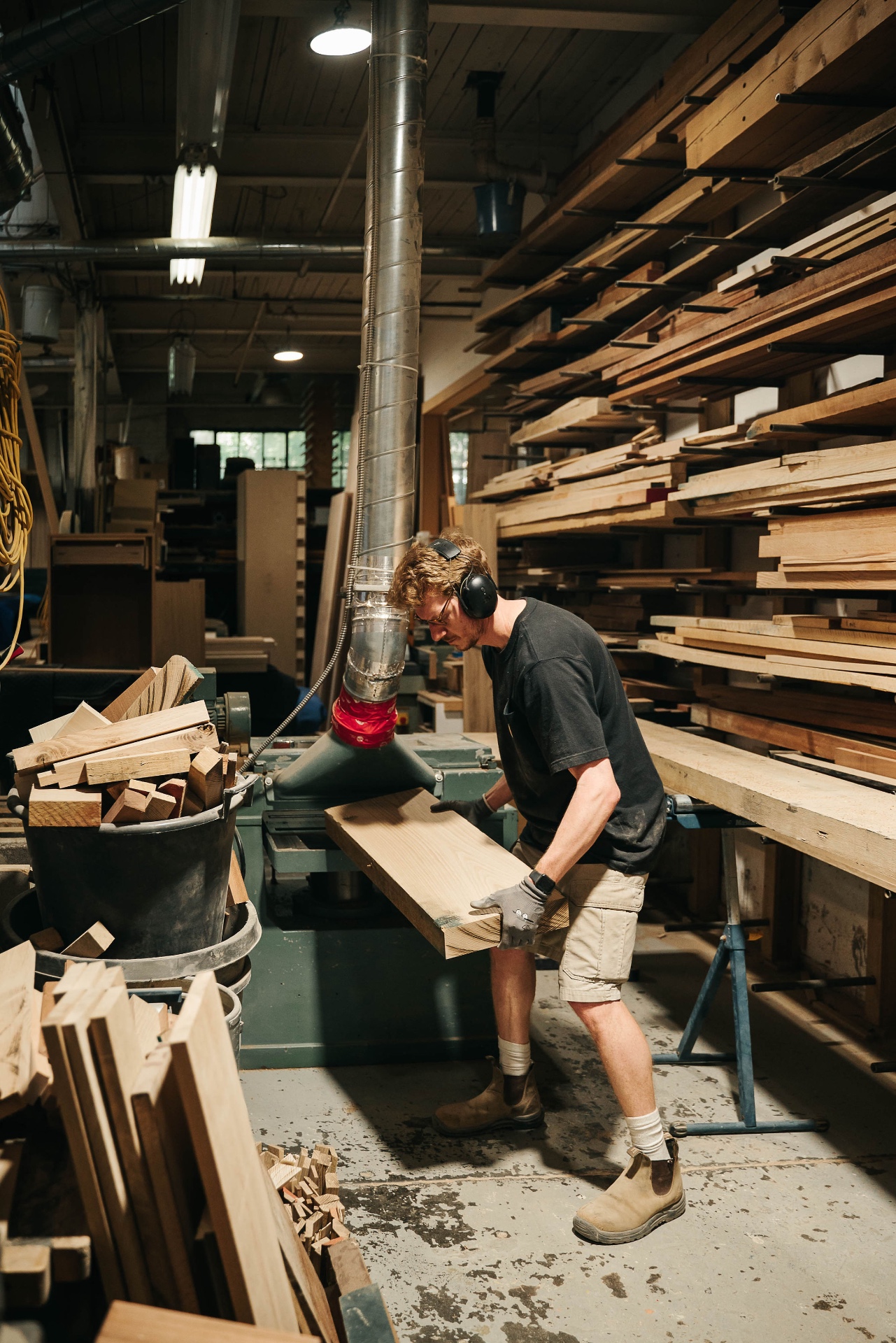
Hand-cut joinery detail on a solid timber frame
Where the piece is worked and handled, solid timber and real joinery.

02 · Real-wood veneer

Where veneer is genuinely better

Large flat panels, tall doors and wardrobe fronts, book-matched grain running across a whole run of cabinetry — and anywhere seasonal movement would fight a solid panel.

Real-wood veneer over a stable substrate is an engineering decision, not a downgrade. On a wide door, solid timber is the worse build: it cups, it twists, and eventually it stops closing. A veneered door with a proper edge stays flat for decades and lets the grain read across the whole elevation.

What matters is what the veneer is: real sliced timber, thick enough to sand lightly, laid over a substrate chosen for stability.
Close-up of a real-wood veneered cabinet door with continuous grain
Real-wood veneer over a stable substrate — grain running across a whole run.

03 · What's inside

What “solid wood” never means, in any workshop

Drawer bottoms, cabinet backs, internal bracing and carcass interiors are engineered board in every quality piece — mine included — because solid planks would move and twist. In my builds, “solid wood” means solid where it counts and engineered where it should be.

I say this plainly here because it's the paragraph that prevents a misunderstanding after a quote is signed. The build spec lists exactly what is solid and what is engineered before anything is cut.

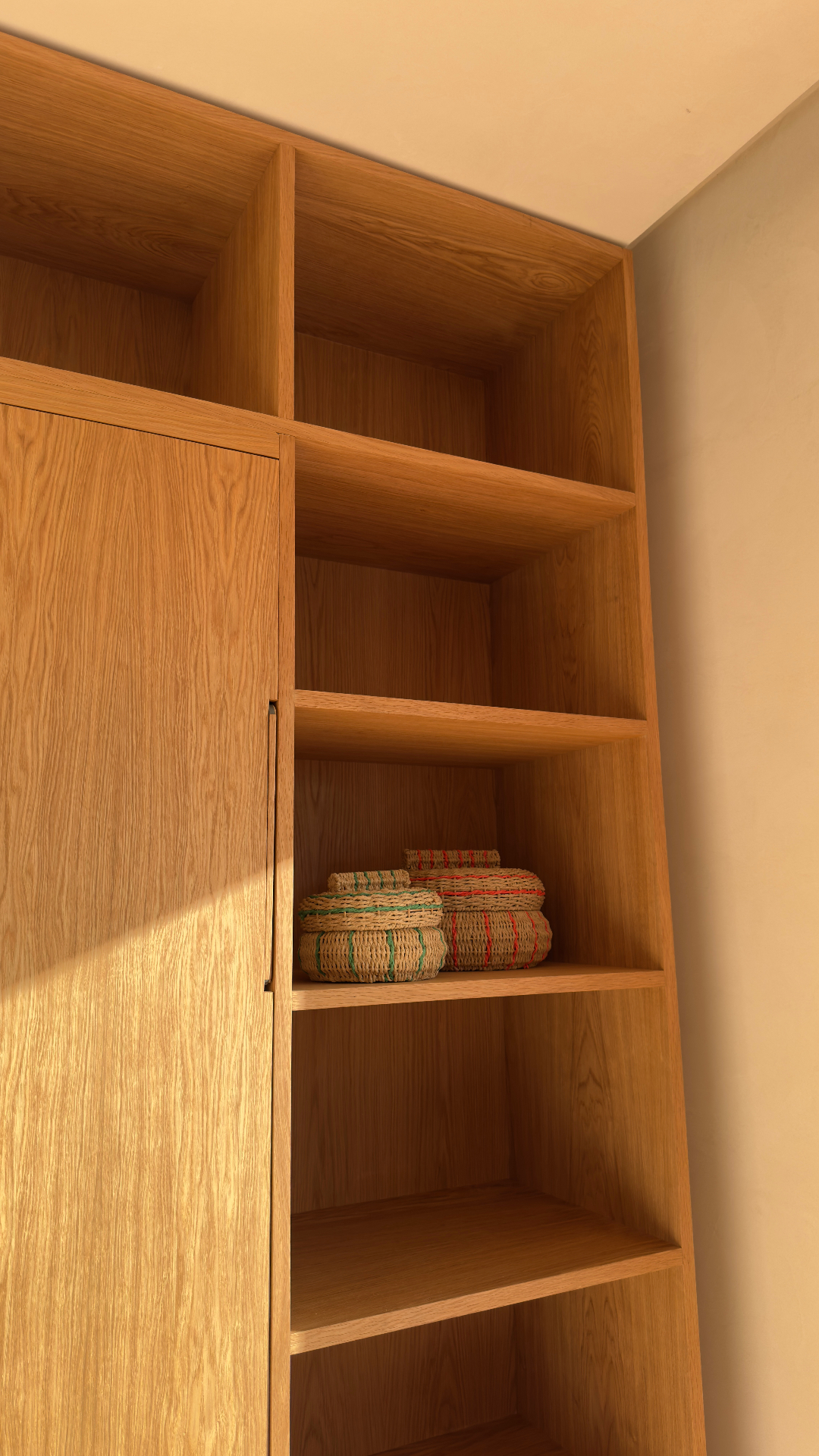
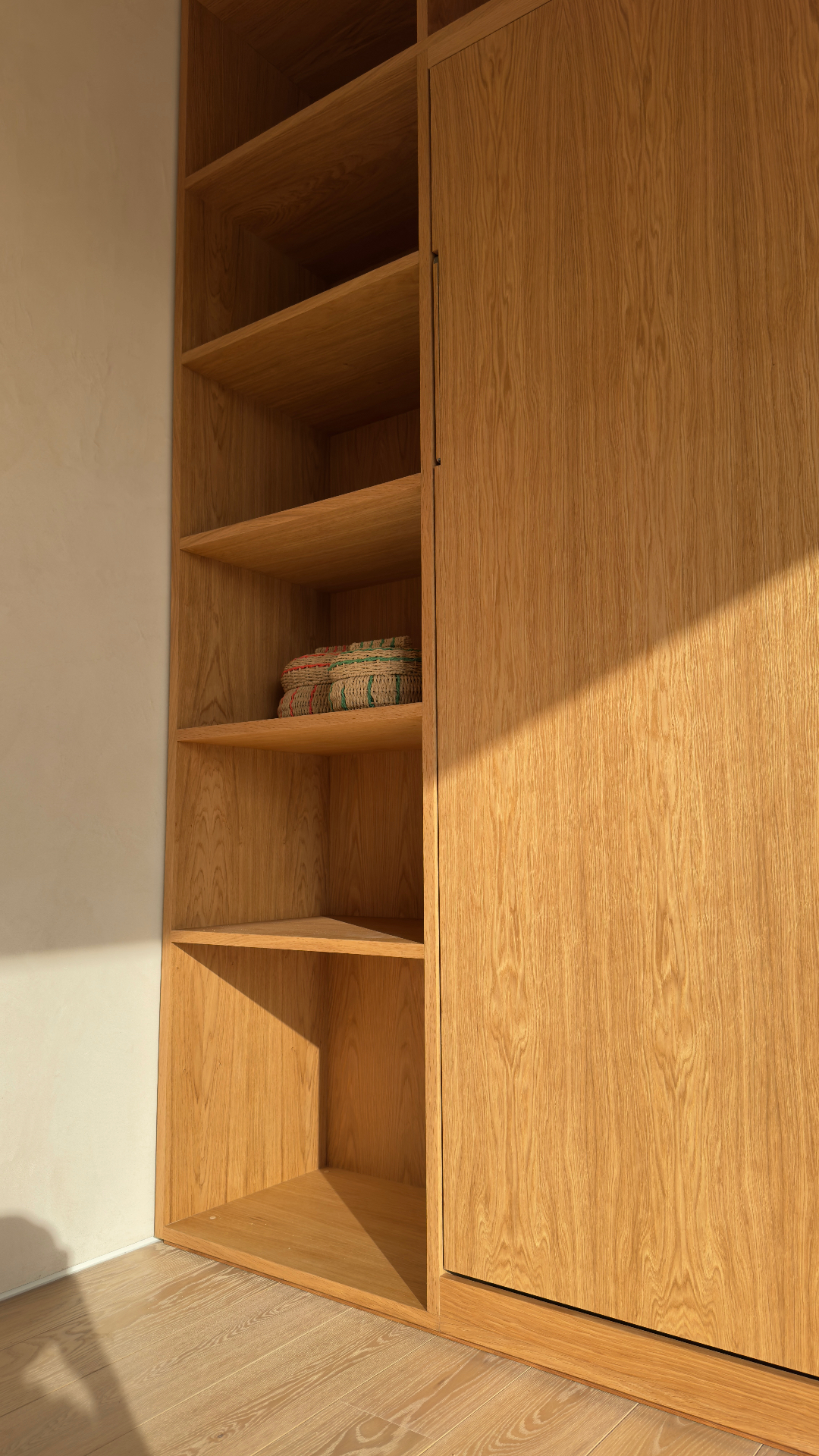
Detail of shelving edges and carcass construction in oak
Edges, backs and interiors: the parts nobody photographs, and the ones that give a piece away.

04 · Cost

What it costs

The same piece in solid versus veneer typically differs by a meaningful margin — enough to change what else you can do in the room.

If it helps you decide, I'll quote both, with the build spec written out for each so you can see exactly what changes.

05 · Painted finishes

Painted finishes

In-frame doors and face frames are built in solid hardwood and hand-finished in any colour. Paint is beautiful, and it's also the finish that hides the most.

What's underneath matters more than the colour on top, precisely because paint hides the substrate. That's why the build spec for a painted piece lists exactly what the doors, frames and carcass are made of before any work begins.

06 · Timbers

Timbers I work in

European oak, ash, walnut and cherry, from FSC-certified mills. Oak for almost everything, ash where I want lightness and spring, walnut and cherry where the piece should be the darkest thing in the room.

Samples are available — come by the atelier, or I'll bring them to the site visit so you can see the timber in your own light.

Not sure which is right for your project?

Tell me about the room and I'll tell you plainly what I'd build it from, and why.

Request a quote